For decades, “the human element” was treated as sacred in baseball. Then fans got strike-zone overlays on every broadcast, started counting the misses in real time, and began flooding the league office with angry emails. As commissioner Rob Manfred put it, fans have now seen that you can do it better, and the theme of the complaints became, what the hell are you waiting for? That pressure has now produced the most significant change to officiating in the sport’s history.
So the real question isn’t whether technology is coming for the strike zone. It already arrived. The Automated Ball-Strike (ABS) Challenge System made its formal debut on Opening Night 2026, when the Giants hosted the Yankees. The question is whether this is the first step toward fully replacing home-plate umpires, or a deliberate stopping point designed to keep them around.
Where Things Actually Stand
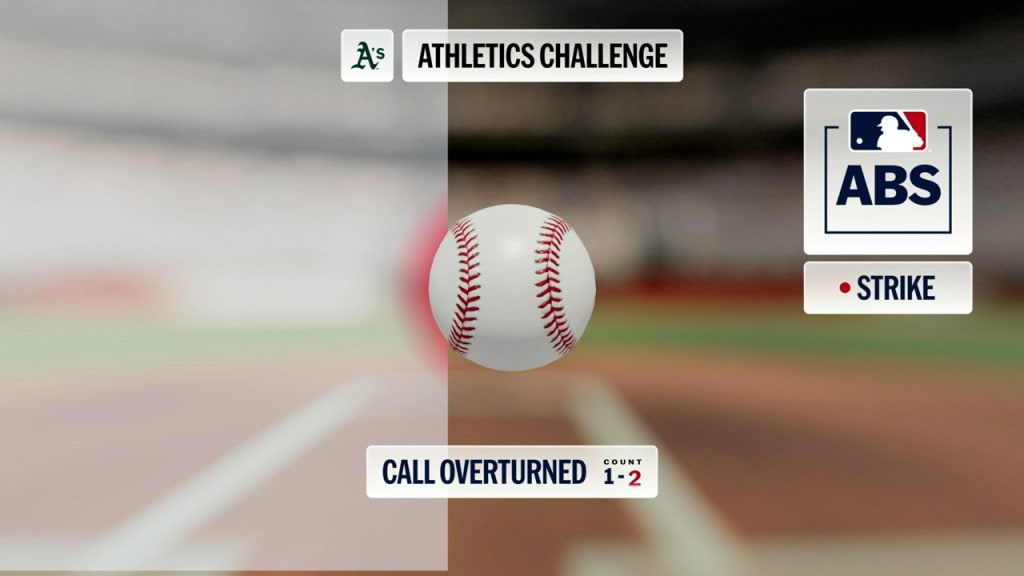
It’s worth being precise, because “robot umps” gets thrown around loosely. MLB did not adopt full automation. It adopted a challenge system, which is a compromise between full ABS and human umpires. Human umpires call every pitch, and each team can appeal two calls per game to the automated system. Only batters, pitchers, and catchers can challenge, a team that wins a challenge keeps it, and challenging incorrectly twice means losing challenges for the rest of the game. The technology itself is the same Hawk-Eye camera setup that powers Statcast, with twelve cameras tracking each pitch against a zone scaled to the individual batter’s height.
Early returns suggest it’s working and that it’s popular. Through the first few weeks, there were 2,160 challenges through May 3, of which 1,145 were successful, an overall success rate of about 53 percent. That number cuts both ways, which is exactly why the obsolescence debate is live.
The Case That Umpires Are on Borrowed Time
The most damning evidence is what the data exposes. Early returns revealed several veteran umpires with decades of experience seeing over 75 percent of their calls overturned after challenges, highlighting systemic inconsistencies in pitch judgment. The challenge system, by design, only surfaces a tiny fraction of calls, the ones players feel strongly enough to contest. Yet even that narrow sample reveals how many pitches get missed in an average game.
There’s also a slippery-slope logic at work. Once fans can see a graphic confirming the machine was right and the human was wrong, the appetite tends to grow rather than shrink. If two challenges per game feel good, why not four? Why not all of them?
And the cultural adjustment has been remarkably fast. Rays manager Kevin Cash noted that, as with a lot of MLB’s recent changes, two weeks into the season it already felt totally normal, as if the system had been around for quite some time. A change that becomes invisible this quickly is a change that’s hard to reverse, and easy to expand.
The Case That Umpires Are Staying Put
The strongest argument against obsolescence is that the people in charge explicitly chose not to replace umpires, and the players backed them. Manfred, who favored the challenge system, said the committee struck the right balance between preserving the integral role of the umpire and the ability to correct a missed call. The strong player preference for the challenge format over calling every pitch was a key factor in the decision. This wasn’t a halfway measure forced by immature technology. Full ABS was tested for years in the minors and was available. The league picked the human-in-the-loop version on purpose.
That 53 percent success rate also undercuts the umps are terrible narrative. A 53 percent challenge success rate means umpires aren’t as bad as some fans think, since players are only challenging calls they feel strongly about and still get it wrong nearly half the time. On the universe of all pitches, not just contested ones, the human accuracy rate is far higher.
Full automation also creates problems the challenge system avoids. ABS effectively redefined the strike zone smaller than the one umpires had been using. Umpires adjusted by calling fewer strikes, hitters got more patient, and walks climbed to their highest level in a decade. A machine zone is not automatically a better zone. It’s a different one, with ripple effects across how the game is played.
Then there’s the part nobody markets but everyone enjoys. The challenge has become entertainment. The process that begins with a player tapping his helmet and ends with the call confirmed or overruled on the videoboard has become a must-see moment across ballparks and broadcasts. Full automation kills that drama entirely. Keeping the human creates the suspense.
The Pros and Cons, Plainly
On the upside, getting high-leverage calls right matters, and the system delivers that without grinding the game to a halt. During Spring Training 2025, challenges averaged 4.1 per game and took an average of 13.8 seconds each. Accountability has arrived without replay-review tedium, and the strategic layer of when to spend a challenge adds genuine intrigue.
On the downside, the transparency that builds trust can also erode it. Every overturned call is now a televised indictment of the person who made it, which is a strange way to treat a workforce you claim to value. There’s a real human cost here. You can understand why umpires feel like they’re watching their profession dissolve in real time. And the redefined zone is a reminder that more accurate and better baseball aren’t the same sentence.
The Prediction
Umpires are not becoming obsolete in the near term, and probably not in the medium term either. The league made a deliberate, player-endorsed choice to keep humans calling pitches, and the challenge format is genuinely popular precisely because it preserves them. The most likely path is expansion within the current framework, perhaps more challenges per game or tweaks to the zone, rather than a jump to full automation.
But obsolete is the wrong frame. The home-plate umpire’s monopoly on the strike zone is already gone. For the first time in a championship season at the highest level, the home-plate umpire’s ball-strike calls are no longer unquestionable. What’s disappearing isn’t the umpire. It’s the umpire’s final word. And once a job has been redefined from authority to first draft, the long-term question stops being whether the human survives and becomes how much of the human we still want.